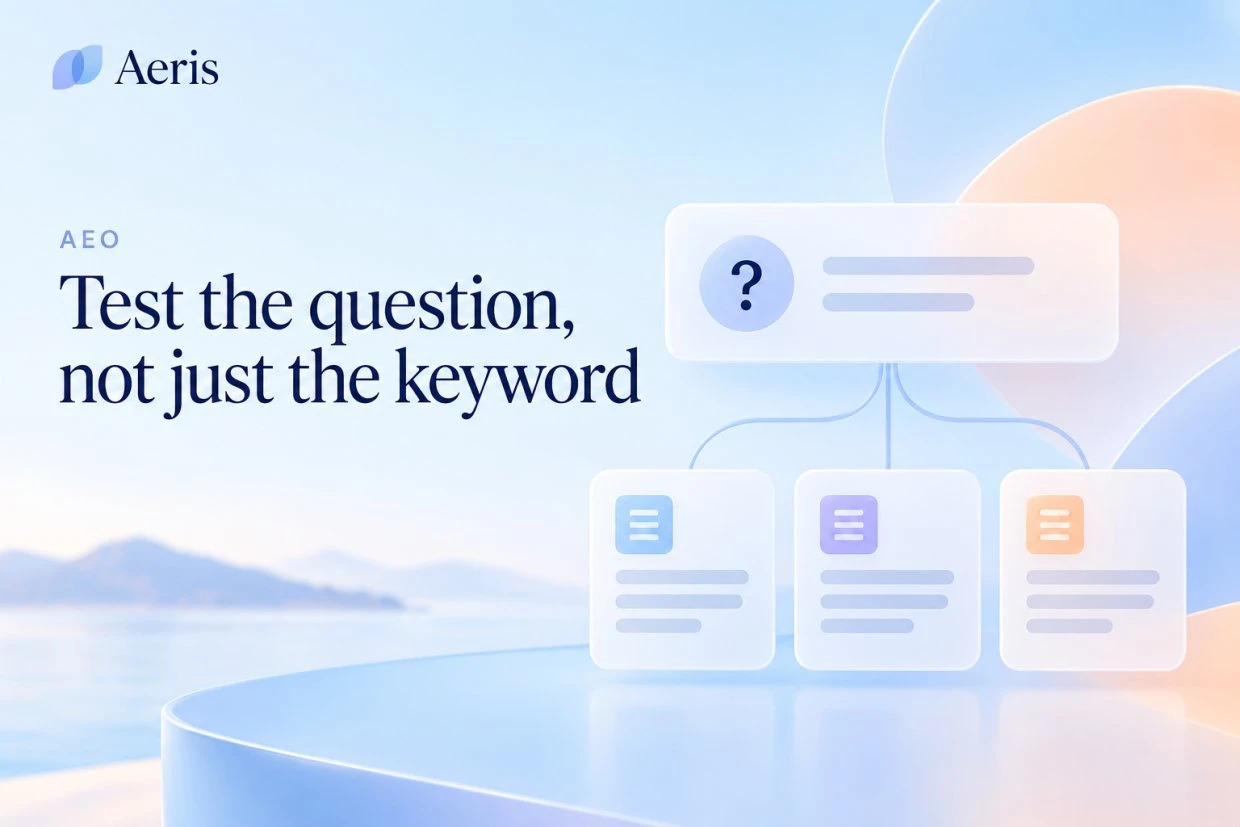
An AI visibility report is difficult to interpret if the questions change every time someone runs it. A team can appear to improve because it selected easier prompts, changed the market or tested a different version of a product question. Before treating a visibility score as a business signal, define the questions behind it.
Google's guidance for AI Overviews and AI Mode says established SEO practices remain relevant and that no special AI markup is required. Eligibility does not guarantee inclusion. Those statements concern Google's Search experiences, not every AI platform. The testing framework below is Aeris editorial analysis for teams seeking a more repeatable view of discovery.
Begin with a customer decision
Choose one commercial question to investigate. For a footwear merchant, that might be whether people researching shoes for a particular use can find the relevant collection. Avoid starting with a broad ambition to appear in every possible answer.
Collect natural questions from public product reviews, customer-facing help material and the language already used on the website. Group them by the decision they express: understanding a category, comparing alternatives, checking suitability or choosing a seller. Keep branded and unbranded questions separate.
Do not include private customer conversations or personal information in an external testing tool. The useful unit is the general buying question, expressed without identifying an individual.
Freeze a small, useful baseline
Create a question set that the team can rerun without rewriting it after seeing the results. Record the exact wording, market, language, platform and test date. Where the interface exposes a mode or model choice, record that too.
A baseline is a measurement convenience, not a representation of every shopper. Add exploratory questions in a separate group so that discovery work does not silently change the denominator of the main report.
Repeat observations when practical. AI answers can vary, and one screenshot should not become a permanent claim about a brand's position. Preserve the outputs or a concise evidence record so a colleague can review how the result was classified.
Define what counts as visibility
A brand mention, a supporting citation and a product recommendation are different observations. Decide which ones matter to the question being tested and show them separately.
For each relevant appearance, inspect the destination. Does the cited page answer the question? Does the recommendation refer to the correct product and market? A mention with an outdated offer may create work for the customer instead of confidence.
Also record cases where an answer is absent or cannot be evaluated. Excluding them without explanation can make a small score look stronger than the evidence supports. Keep the raw count beside any percentage and label the scope of the test.
Turn findings into page improvements
When the same information gap appears repeatedly, inspect the underlying page. A useful product or category page should explain the attributes and limitations a buyer needs to make the relevant decision. Assign one owner to correct unclear, inconsistent or unsupported information.
Choose changes that help a human reader as well. A concise comparison, an explicit sizing explanation or a clear description of compatibility is more useful than adding generic paragraphs that repeat the target phrase.
Document the change and its release date. Rerun the fixed question set after an appropriate observation period, and keep other major site or campaign changes visible in the review. An improvement after an edit is an association until the design supports a stronger conclusion.
Connect the report to a decision
Keep visibility observations separate from referral traffic and business outcomes. A citation does not automatically produce a visit, and a visit does not guarantee a retained sale. Use available analytics to understand what happens after people arrive without pretending that every AI impression is observable.
At the review, decide which information gap to fix next and which question group needs more evidence. The purpose of AEO testing is a disciplined learning cycle: stable questions, inspectable observations and useful improvements to the customer experience.
Source
Google Search Central: AI features and your website, reviewed September 18, 2026. The question-set framework is Aeris editorial analysis.